


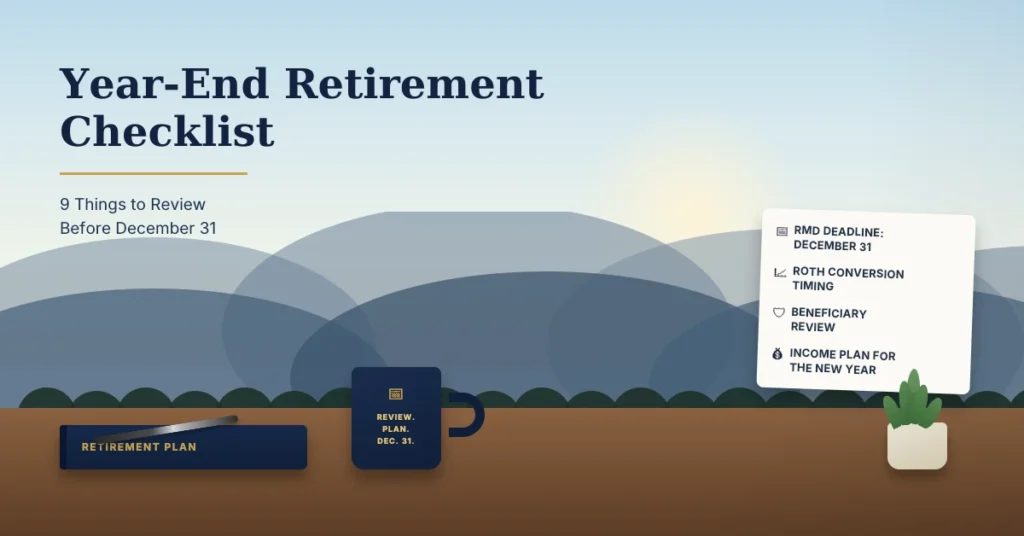
The last six weeks of the year are when a handful of retirement deadlines either get handled or quietly slip by. Some of them can’t be fixed after the calendar turns, and a short review now can save you a surprise in April.
This year-end retirement planning checklist is organized around the three goals from our overview, Protection, Accumulation, and Income: The 3 Goals Behind Every Annuity Decision, so you can see not just what to do, but why.

Income: Make Sure the Paycheck Works
1. Take your required minimum distribution (RMD)
If you have a traditional IRA or most workplace retirement plans and you’re old enough that RMDs apply, the deadline is generally December 31. The exception is your first RMD, which may be delayed until April 1 of the following year, though that can mean two distributions in one tax year. Missing an RMD can trigger a penalty. Read our full guide, Required Minimum Distributions: What South Carolina Retirees Need to Know Before Year-End.
If you give to charity, ask whether a qualified charitable distribution could satisfy part of your RMD.
2. Estimate your taxable income for the year
Pension payments, Social Security, annuity income, withdrawals, and any conversions all add up. Knowing roughly where you’ll land can help you decide whether to take more or less before December 31. A tax professional can confirm the details.
3. Review your income plan for the new year
Social Security benefits typically get a cost-of-living adjustment in January, but costs often rise too. Compare your expected income with your essential expenses. Our guide, How Much Retirement Income Do You Actually Need?, makes this easy to do.
Accumulation: Use the Window That’s Closing
4. Confirm your workplace plan contributions
Contributions to a 401(k) or similar plan generally have to go through payroll by year-end. If you’re still working and want to adjust, check with your plan administrator before your last payroll of the year. IRA contributions, by contrast, can usually be made until the tax filing deadline.
5. Consider a Roth conversion
A Roth conversion has to be completed by December 31 to count for this tax year. It increases your taxable income in the year you do it, so the amount and timing matter. It’s a conversation to have with a tax professional, not a decision to rush.
Protection: Safeguard What You’ve Built
6. Review your beneficiary designations
Beneficiary forms override your will for retirement accounts, annuities, and life insurance. If you’ve had a marriage, divorce, birth, or death in the family, confirm they’re current. See Estate Planning Basics for Retirees.
7. Review your exposure to market risk
After a year of market ups and downs, it’s worth checking how much of your savings could drop sharply right before you need it. If that portion has crept up, strategies designed to protect principal may be worth a look. See our Retirement Countdown guide for how this changes by stage.
8. Check your legal documents
A will, power of attorney, and healthcare directive should all be current. If it’s been years since you last looked, schedule a time with your attorney.
9. Know the Deadlines Next to Year-End
- Medicare open enrollment runs through December 7 for plan changes. Confirm details with Medicare or a licensed Medicare professional.
- Annuity contracts may have free-withdrawal provisions or anniversary dates that matter. Check your statements for upcoming dates.
- Rollovers started late in the year can take weeks to complete. If you’re moving an old 401(k), see our IRA Rollover Guide and give yourself time.
A Better Time Than April
Most of these items take an hour or two to review, and all of them are easier now than after January 1. If anything on the list raises a question, that’s a good reason to ask it before the deadline, not after.
At PAG Advisory Group, we help South Carolina and Charlotte-area retirees review their plans around protection, accumulation, and income, and we’re happy to walk through this checklist with you.
This article is for general educational purposes and is not tax, legal, or investment advice. Deadlines, limits, and rules change, so confirm current details with the IRS, your plan administrator, or a qualified tax professional. PAG Advisory Group specializes in insurance-based retirement strategies and does not offer securities.
Want a second set of eyes before December 31? Schedule a free year-end retirement review and we’ll go through your checklist with you.