


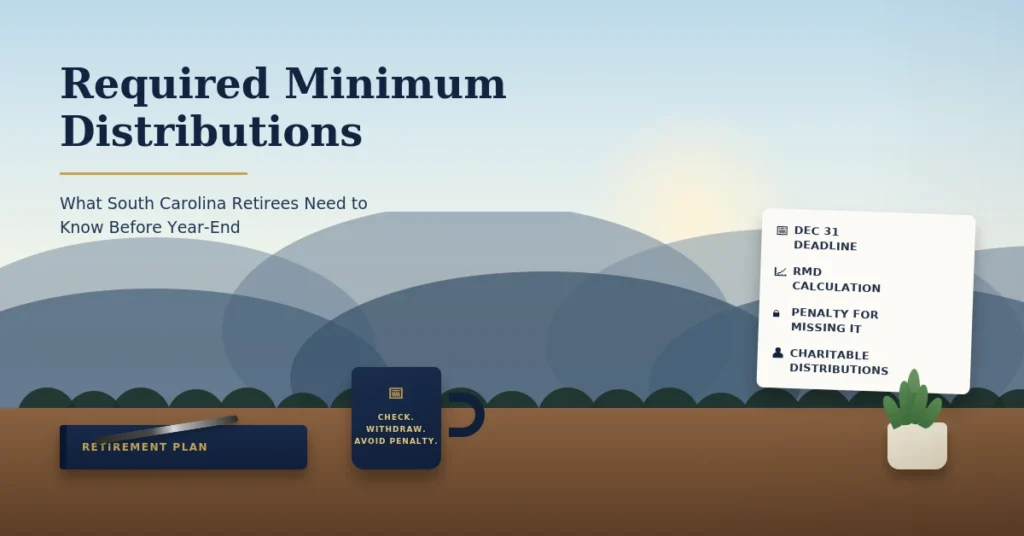
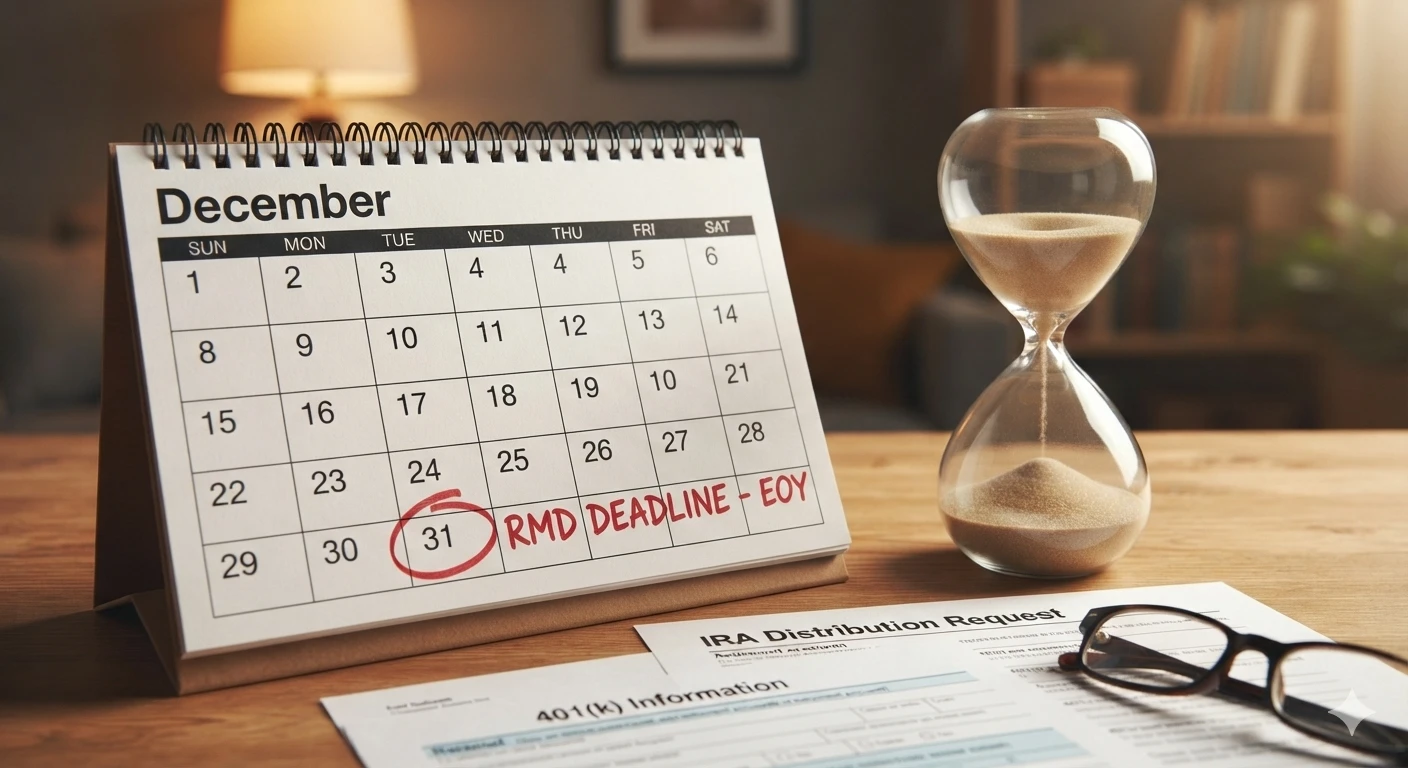
As the calendar year winds down, one deadline matters more than most for retirees with traditional IRAs and 401(k)s: the Required Minimum Distribution (RMD) deadline. Missing it doesn’t just mean a late withdrawal it can trigger one of the steepest penalties in the entire tax code.
Here’s what South Carolina retirees need to know about RMDs before December 31st arrives.
What Is a Required Minimum Distribution?
An RMD is the minimum amount the IRS requires you to withdraw each year from most tax-deferred retirement accounts, starting at a certain age. The government allowed these accounts to grow tax-deferred for decades RMDs are how it eventually collects tax on that growth.
📊 Which Accounts Require RMDs?
- Traditional IRAs
- SEP and SIMPLE IRAs
- Most 401(k), 403(b), and 457(b) plans
- Inherited IRAs (with different rules depending on the beneficiary)
Roth IRAs are notably exempt from RMDs during the original owner’s lifetime, which is one reason Roth conversions come up so often in tax planning conversations.
When Do RMDs Start?
The RMD starting age has changed in recent years due to federal legislation, and it depends on your birth year. Because these rules have shifted more than once, the single most reliable step is confirming your specific RMD start age directly with your IRA custodian or a tax professional don’t rely on an outdated rule of thumb from a few years ago.
How Is the RMD Amount Calculated?
Your RMD is calculated by dividing your account balance (as of December 31st of the prior year) by a life expectancy factor published in IRS tables. Each account typically needs this calculation done separately, though IRA balances can often be combined for withdrawal purposes while 401(k)s generally cannot.
The Penalty for Missing an RMD
This is the part that catches people off guard: missing an RMD, or withdrawing less than required, can trigger an excise tax on the shortfall. While recent legislation reduced this penalty from its historical level, it remains significant enough that missing a deadline is a costly mistake worth avoiding entirely.
A Year-End RMD Checklist
- Confirm your RMD start age with your custodian if this is your first required year
- Calculate the correct amount for each account that requires one
- Check whether your accounts can be aggregated (IRAs often can; 401(k)s typically cannot)
- Decide on a withdrawal strategy — lump sum, monthly, or tied to a specific need
- Consider the tax impact of taking the RMD in December versus earlier in the year
- Review whether a Qualified Charitable Distribution (QCD) makes sense, which can satisfy an RMD while sending funds directly to a qualifying charity, potentially reducing taxable income
- Confirm the withdrawal is processed before December 31st — not just requested, but completed
RMDs and Your Broader Income Plan
RMDs don’t exist in isolation — they interact with Social Security taxation, Medicare premium thresholds (IRMAA), and your overall tax bracket for the year. A large RMD can sometimes push retirees into a higher Medicare premium tier or increase how much of their Social Security benefit is taxable, which is why RMD planning works best as part of a coordinated year-round strategy, not a scramble every December.
Don’t Let December 31st Sneak Up on You
At PAG Advisory Group, we help South Carolina retirees calculate RMDs correctly, understand how they interact with the rest of their retirement income plan, and avoid the penalty that comes with missing the deadline.
This article is for general educational purposes and is not tax, legal, or investment advice. Consult a qualified tax professional regarding your specific RMD obligations. PAG Advisory Group specializes in insurance-based retirement strategies and does not offer securities.
Not sure if you’re on track with this year’s RMD? Schedule a free retirement review before the year-end deadline.