


Retirement planning isn’t just about how much you save
it’s about avoiding the missteps that quietly drain a well-built nest egg. Every year, retirees and pre-retirees across South Carolina make the same handful of retirement mistakes, often without realizing the cost until years later.
Here are seven of the most common — and how to steer clear of them.
The 7 Mistakes at a Glance
| # | Mistake | Why It’s Costly |
|---|---|---|
| 1 | No withdrawal strategy | Overpaying in taxes or draining accounts in the wrong order |
| 2 | Claiming Social Security too early | Permanently locks in a smaller monthly check — for life |
| 3 | Underestimating healthcare costs | Large unplanned expenses late in retirement |
| 4 | Too conservative or too aggressive investing | Missed growth, or full exposure to a downturn |
| 5 | Ignoring sequence-of-returns risk | A downturn early in retirement can be permanently damaging |
| 6 | Rolling over accounts incorrectly | Triggers unexpected taxes and penalties |
| 7 | Not updating the plan | Strategy drifts out of sync with your actual life and goals |
1. Not Having a Withdrawal Strategy
Saving diligently for decades doesn’t automatically translate into knowing how to draw that money down safely. Without a plan for which accounts to withdraw from and in what order, retirees often pay more in taxes than necessary or risk running out of money too soon.
The fix: Build a tax-efficient withdrawal sequence — typically taxable accounts first, then tax-deferred, then tax-free — tailored to your specific mix of accounts.
2. Claiming Social Security Too Early
Claiming at 62 instead of waiting until Full Retirement Age (or later) permanently locks in a smaller monthly check — sometimes 25-30% smaller for life. As covered in our recent Social Security guide, this single decision can mean a six-figure difference over a retirement.
The fix: Coordinate your claiming age with your full income plan, not as a standalone decision made out of habit or urgency.
3. Underestimating Healthcare and Long-Term Care Costs
Healthcare costs tend to rise faster than general inflation, and long-term care — whether in-home or facility-based — can be one of the largest unplanned expenses in retirement.
The fix: Build a specific line item for healthcare and long-term care into your retirement income plan, rather than assuming Medicare will cover everything.
4. Being Too Conservative — or Too Aggressive — With Investments
Some retirees move everything to cash out of fear, missing years of growth they’ll likely need over a 20-30 year retirement. Others stay too aggressively invested in the market, leaving their entire nest egg exposed right when they can least afford a downturn.
The fix: A balanced approach — often including guaranteed income tools like fixed indexed annuities alongside market-based growth — protects against both extremes.
5. Ignoring Sequence-of-Returns Risk
A market downturn in your working years is a paper loss you have time to recover from. The same downturn in your first few years of retirement, while withdrawing income, can permanently damage how long your money lasts — even if the market fully recovers later.
The fix: Structure guaranteed income sources to cover essential expenses, so market swings affect your discretionary spending, not your ability to pay the bills.
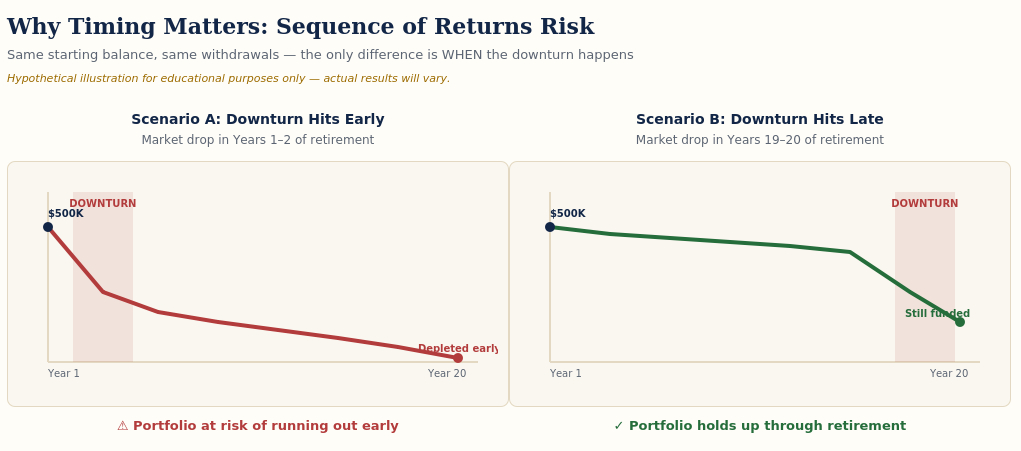
A hypothetical example: the same starting balance and withdrawals, but a downturn early in retirement can deplete a portfolio years before one that hits later.
6. Rolling Over Retirement Accounts Incorrectly
As we covered in our IRA rollover guide, missing the 60-day window on an indirect rollover — or forgetting about mandatory 20% withholding — can trigger unexpected taxes and penalties on money that was never meant to be taxed yet.
The fix: Use direct, trustee-to-trustee rollovers whenever possible, and get a second opinion before moving old 401(k) or IRA funds.
7. Not Updating the Plan as Life Changes
A retirement plan built five or ten years ago may no longer reflect your current health, family situation, or financial picture. Plans that aren’t revisited regularly tend to drift out of alignment with reality.
The fix: Review your retirement income plan at least annually, and always after a major life event — retirement itself, a health change, the loss of a spouse, or a significant market shift.
Avoiding These Mistakes Starts With a Real Plan
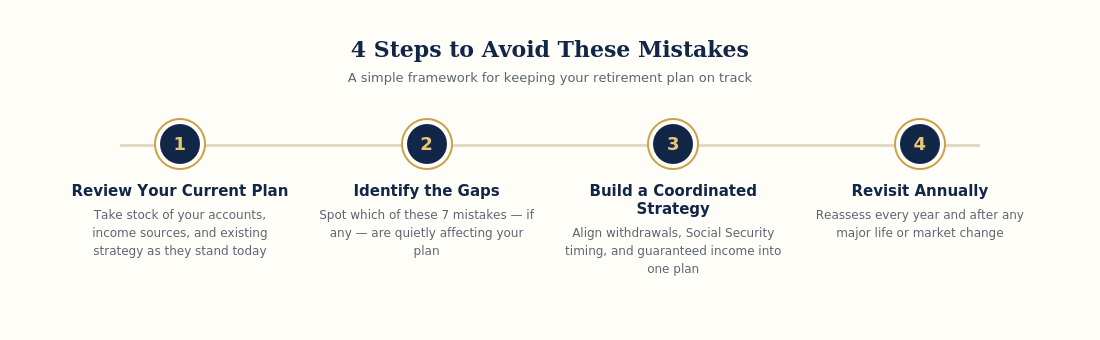
Most of these mistakes aren’t about lack of effort — they’re about not having a coordinated, comprehensive plan that accounts for taxes, timing, healthcare, and market risk together. A fiduciary consultant job is to help you see the full picture before a costly mistake happens, not after.
At PAG Advisory Group, William Garland works with South Carolina retirees and pre-retirees to build retirement income plans that avoid these pitfalls from the start.
Want a second set of eyes on your retirement plan? Schedule a free, no-obligation review and find out if any of these mistakes are quietly affecting your retirement.